

About AIITA 2027

Artificial Intelligence (AI) continues to drive advancements in academic research and technological innovation. As a rapidly evolving field, AI has brought significant developments in computing and intelligent systems, with applications spanning robotics, autonomous decision-making, control engineering, simulation technologies, and other emerging fields.
The 2027 7th International Conference on Artificial Intelligence and Industrial Technology Applications (AIITA 2027) will be held in Suzhou, China, from April 9 to 11, 2027. The AIITA conference series has successfully held six editions, attracting distinguished experts, scholars, and professionals to exchange research findings and explore developments in artificial intelligence and industrial technology. Building on this experience, AIITA 2027 aims to provide an international forum for sharing innovative ideas, advancing academic collaboration, and bridging theoretical research with practical applications. AIITA 2027 cordially invites researchers, engineers, and practitioners to submit original contributions, including research papers, project reports, review articles, and industrial case studies. Submissions are welcome across a broad range of topics related to AI and its applications, particularly those highlighting theoretical insights, technological innovations, and practical advancements in intelligent and industrial systems.
Important Dates
Submission
Date
January
25
2027
Notification of
Acceptance
February
25
2027
Final Paper
Submission Date
March
09
2027
Registration
Deadline
March
25
2027
Conference
Dates
April
09-11
2027

Countdown to the Conference:
Conference Topics
📚︎Track: Industrial Intelligent Computing and High-Performance Computing
· Industrial Heterogeneous Computing Resource Pooling and Collaborative Scheduling, Cloud-Edge-Device Collaboration for Industrial Intelligent Computing, Token Efficiency Optimization and Inference Acceleration for Industrial Large Language Models, Multimodal Token Representation and Compression, On-Device Deployment of Large Models and Lightweight Edge Computing, Energy-Efficient Scheduling and Green Computing for Industrial Intelligent Computing, Low-Latency Networking Technologies for Industrial Edge Computing, QoS Evaluation Methods for Industrial Intelligent Computing
📚︎Track: Industrial Large Language Models and Multi-Agent Systems
· Generative AI Models for Industrial Applications, Pretraining and Domain-Specific Fine-Tuning of Industrial Large Language Models, Knowledge Injection and Retrieval-Augmented Generation (RAG) for Industrial Large Language Models, Large Model-Driven Industrial Design and Process Generation, Hallucination Mitigation and Reliability Enhancement for Industrial Large Language Models, Industrial Multimodal Large Language Models and Vision-Language Understanding, LLM-Driven Multi-Agent Systems for Industrial Applications, Task Decomposition and Collaborative Decision-Making for Industrial Intelligent Agents, Communication Protocols and Standardized Tool Interfaces for Multi-Agent Systems, Applications of Intelligent Agents in Production Line Scheduling and Supply Chain Optimization, Online Learning and Continuous Evolution of Industrial Intelligent Agents, World Model Development and Training for Industrial Applications, Integration of World Models and Digital Twins, Industrial Cognitive Computing and Causal Reasoning
📚︎Track: Industrial Data Engineering and High-Quality Datasets
·Big Data Collection and Cleaning, Data Annotation Tools and Technologies, Data Lifecycle Management, Metadata Management and Standardization, Privacy Protection and Compliance Governance for Industrial Data, Data Conflict Resolution and Redundancy Elimination, Dataset Generation and Data Augmentation Techniques, Dataset Evaluation, Inspection, and Quality Control, Intelligent Dataset Construction Techniques, High-Quality Corpus Engineering for Industrial Large Language Models, Fusion and Alignment of Multimodal Industrial Data
📚︎Track: Industrial Data Engineering and High-Quality Datasets
· Big Data Collection and Cleaning, Data Annotation Tools and Technologies, Data Lifecycle Management, Metadata Management and Standardization, PrivacyProtection and Compliance Governance for Industrial Data, Data Conflict Resolution and Redundancy Elimination, Dataset Generation and Data Augmentation Techniques, Dataset Evaluation, Inspection, and Quality Control, Intelligent Dataset Construction Techniques, High-Quality Corpus Engineering for Industrial Large Language Models, Fusion and Alignment of Multimodal Industrial Data
📚︎Track: Embodied Intelligence and Intelligent Industrial Control
·Perception-Decision-Execution Closed-Loop Systems for Industrial Embodied Agents, Vision-Language-Action (VLA) Models and Industrial Manipulation, Multimodal Perception and Scene Understanding for Industrial Robots, Applications of Embodied Intelligence in Flexible Manufacturing and Assembly, Sim-to-Real Transfer for Industrial Embodied Intelligence, Embodied Interaction and Safety in Human-Robot Collaboration, Mobile Manipulators and Production Line Logistics, Long-Horizon Task Planning for Embodied Agents, Machine Learning-Based Industrial Process Optimization, Large Model- and Agent-Driven Production Scheduling, Deep Learning and Industrial Image Analysis, Integration of Model Predictive Control and Learning, Intelligent Prediction and Anomaly Detection, Applications of Reinforcement Learning and Multi-Agent Reinforcement Learning in Industrial Control, Digital Twins and Intelligent Operation and Maintenance of Industrial Processes, Neural Rendering and Scene Generation for Industrial Perception
Publication
 (ISBN: 979-8-3195-5727-8)
To maintain a high-quality publication, all submissions undergo a rigorous review process of 2-3 rounds of double-blind peer review. All accepted papers of AIITA 2027 will be submitted for possible inclusion into IEEE Xplore subject to meeting IEEE Xplore’s scope and quality requirements, and will subsequently be submitted to EI Compendex and Scopus for indexing. All conference proceedings papers cannot be less than 4 pages.
AIITA 2026 | ||
📚︎Cover |
📚︎Ei Compendex |
📚︎Scopus |


AIITA 2025 | ||
📚︎Cover |
📚︎Ei Compendex |
📚︎Scopus |


AIITA 2024 | ||
📚︎Cover |
📚︎Ei Compendex |
📚︎Scopus |
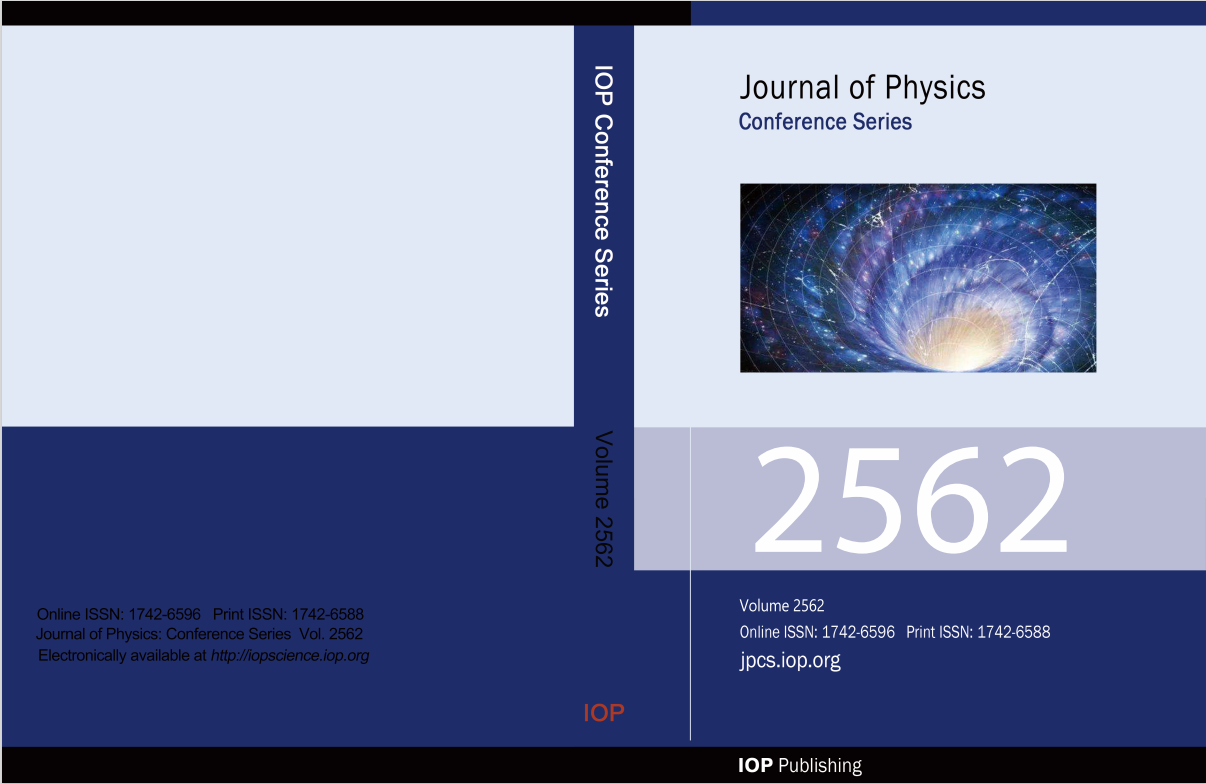
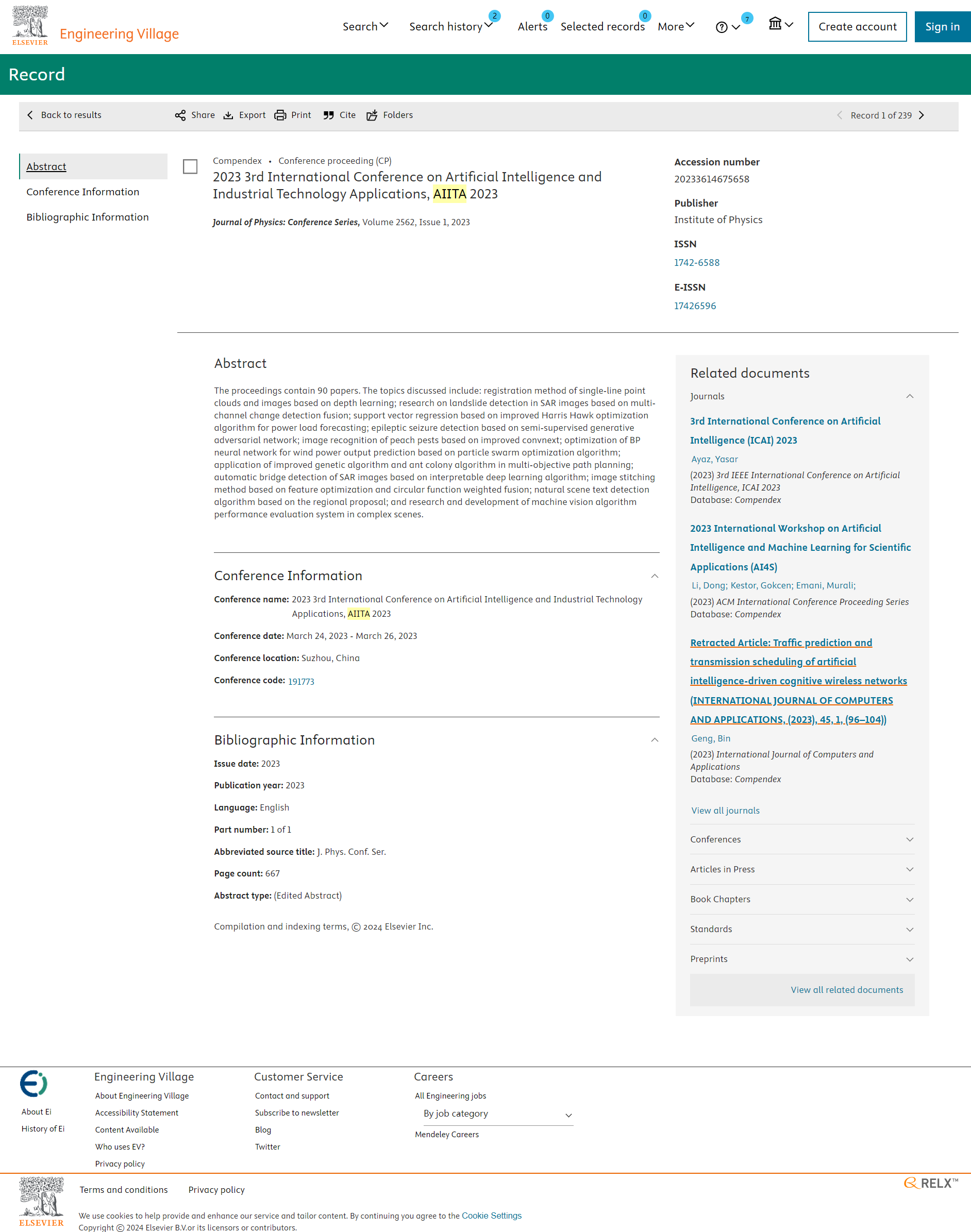
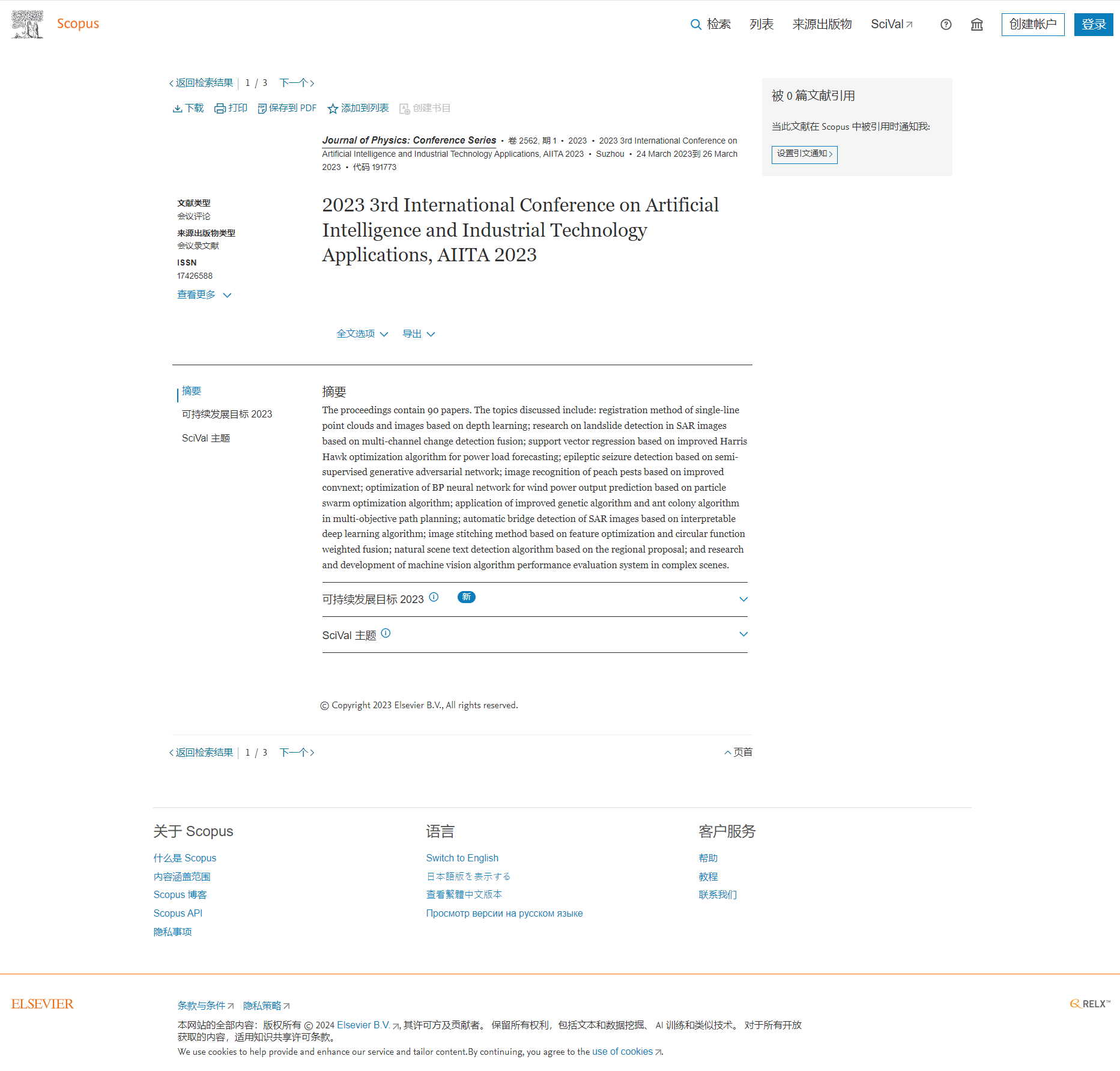
AIITA 2023 | ||
📚︎Cover |
📚︎Ei Compendex |
📚︎Scopus |
AIITA 2022 | ||
📚︎Cover |
📚︎Ei Compendex |
📚︎Scopus |


AIITA 2021 | ||
📚︎Cover |
📚︎Ei Compendex |
📚︎Scopus |


Note: All submitted articles should report original research results, experimental or theoretical, not previously published or under consideration for publication elsewhere. Articles submitted to the conference should meet these criteria. We firmly believe that ethical conduct is the most essential virtue of academics. Hence, any act of plagiarism or other misconduct is totally unacceptable and cannot be tolerated.
Sponsor

 |


Contact
Conference Secretary: Hanna He
Tel: +86-13902493194 (Wechat)
E-Mail: icaiita@163.COM